admin

Liya's Guest blog Best digital marketing institute in Calicut

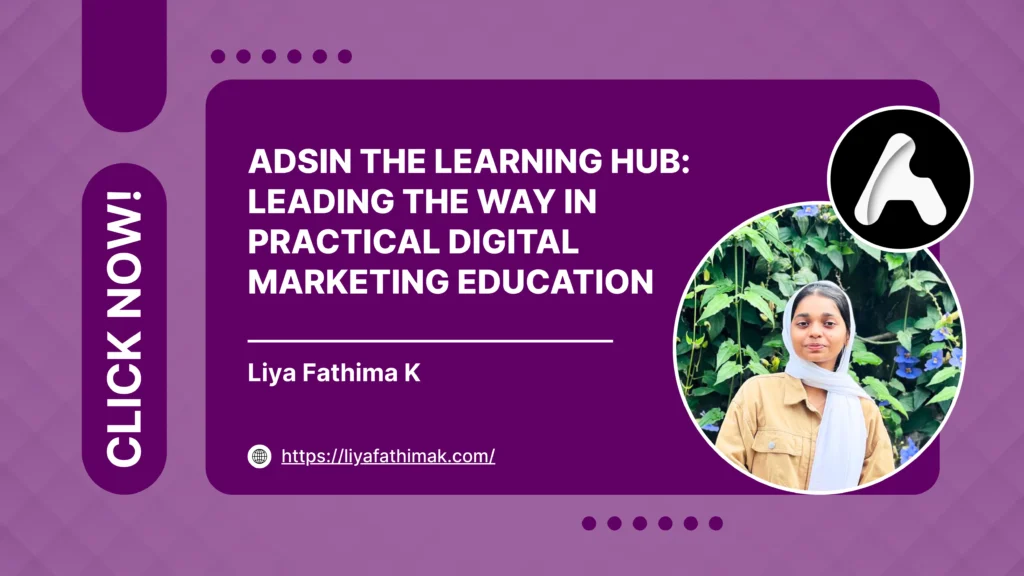
Adsin: Leading the Way in Practical Digital Marketing Education

Adsin The Learning Hub: Leading the Way in Practical Digital Marketing Education In a world where digital transformation is happening faster than ever, the demand for skilled digital marketers continues to rise. Whether it’s social media, search engines, online advertising, or branding, every business now depends on strong digital strategies to grow. This shift has created an urgent need for professional training, and Adsin The Learning Hub Institute has emerged as one of the most dedicated and practical-focused training centers for students, professionals, and entrepreneurs who want to build a successful career in the digital world. Adsin The Learning Hub is built on one strong mission to provide real, practical, industry-ready skills that help learners confidently step into the world of digital marketing. Instead of limiting students to theory-based classes, the institute ensures that every learner becomes a practical problem-solver. From handling live ad campaigns to designing social media content and working on real client projects, students at Adsin experience the digital world from day one. A Practical Approach to Learning What sets Adsin The Learning Hub apart is its hands-on teaching style. Each topic is taught with real examples, tools, and step-by-step practice sessions. Students learn how to create SEO-friendly content, run paid ads, understand analytics, brand a business on social media, and manage digital marketing projects like professionals. This practical exposure makes learning enjoyable, meaningful, and highly effective. Experienced Mentors Who Guide You Training at Adsin becomes truly impactful because of its experienced mentors. The trainers are skilled professionals who have worked closely with brands, campaigns, and businesses. Their real-world experience helps students understand not just what to do, but how and why to do it. The mentors guide each student personally, making sure no one is left behind. Their support gives students the confidence to try new ideas, take creative risks, and grow their skills. Learning the Latest Tools Digital marketing changes quickly, and using the right tools makes a big difference. At Adsin The Learning Hub, students get hands-on practice with important tools like: Google Ads Meta Ads Manager Canva & Adobe Tools Keyword Research Tools Social Media Management Platforms Analytics & Reporting Tools By learning these tools, students become job-ready even before completing the course. Career-Building Environment One of the biggest advantages of learning at Adsin is its career-focused environment. The institute prepares students for real opportunities through: Resume building Portfolio creation Interview preparation Freelancing guidance Internship-based tasks Practical case studies Whether someone wants a job, wants to freelance, or wants to promote their own business, Adsin provides the right direction and support. Courses Designed for the Modern Learner Adsin The Learning Hub offers a variety of skill-building programs, including: Digital Marketing Graphic Designing Social Media Marketing Branding & Content Creation Creative Designing Workshops Each course is structured in a simple, easy-to-understand, and fully practical format, making it suitable even for complete beginners. A Place Where Students Grow What makes Adsin truly special is the supportive atmosphere. Students feel comfortable asking doubts, trying new ideas, and building confidence through continuous practice. Even after the course ends, the institute stays connected with learners, offering tips, feedback, and career advice whenever needed. Your Path to a Digital Future Starts Here As the digital industry continues to grow, having the right skills is the key to success. Adsin The Learning Hub Institute stands as a training center that focuses on real learning, real results, and real career growth. For anyone who wants to build a strong future in digital marketing or creative design, Adsin offers the perfect starting point.   It’s not just an institute it’s a place where skills are built, creativity is encouraged, and careers begin. Author: Liya Fathima KDigital Marketing Expert in Calicut Back Home For Admission Recent Post Recent Post Uncategorized Digital Marketing Graphic Designing Multimedia Marketing Zero To Hero Follow Us Instagram Facebook Linkedin Threads Youtube

Adsin: Leading the Way in Practical Digital Marketing Education Read More »

Salim's Guest blog Best digital marketing institute in Calicut

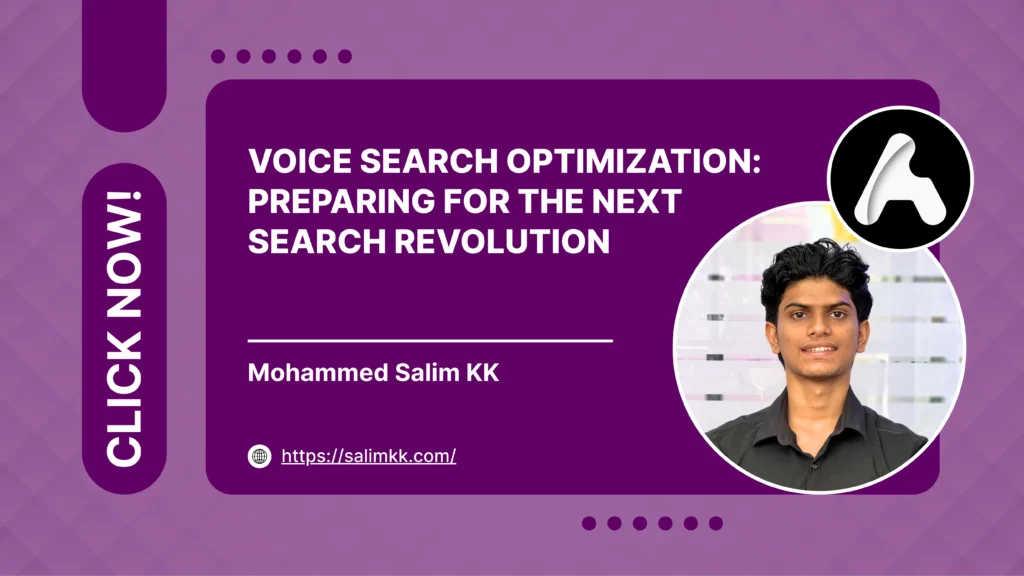
Voice Search Optimization: Preparing for the Next Search Revolution

Voice Search Optimization: Preparing for the Next Search Revolution Optimizing voice search has become a reality of today, not a reality of tomorrow. The manner in which people search on the internet has been changing at a rapid pace because of improvements in Artificial Intelligence, Natural Language Processing, and Smart Devices. Today, people have been using voice assistants like Google Assistant, Amazon Alexa, Apple Siri, and Microsoft Cortana. Rather than typing in search phrases on a search engine, people now use complete phrases in the form of a question asked in a conversational tone. This has given rise to the search revolution in the modern world. It has become essential for all businesses, marketers, and website owners to alter their search engine optimisation strategies in the era of voice search. In this piece, we’re going to examine the reasons for the rapid adoption of voice searches, what sets these kinds of searches apart from their traditional counterparts, and what methods have been most successful in optimizing for the future of voice SEO. Why Voice Search Is Growing So Fast One of the major benefits of voice search is that users are not required to use their hands. They can search while driving, cooking, walking, or doing other tasks. Asking a question verbally is easier, faster, and more convenient than typing with mobile keyboards. Ease of use has especially led to the popularity of voice search among: Mobile users Smart Speaker Owners Busy professionals Elderly users and those with accessibility needs 2. Maturity of Smart Devices The rising adoption of smartphones, smart speakers, and wearables has seen the adoption rate of voice search increase. This is due to the adoption of devices like Google Nest, Amazon Echo, Apple Watches, as well as smart TVs. As devices become more budget-friendly, voice search will see an increased use. 3. Advances in Artificial Intelligence and Voice Recognition Voice recognition has come a long way in the past few years. With machine learning and AI technologies in place, voice recognition assistants have been able to understand:   Accents and Dialects Natural speech patterns Context and purpose of queries This has led to an improvement in accuracy, which has encouraged users to trust the technology and utilize it, especially when it comes to crucial tasks like navigation or making a purchase. How Voice Search Is Different from Traditional Search Voice searching is very different from other methods of searching using text input, and it is essential for optimization to understand these differences. 1. Conversational and Longer Queries While typed searches are typically concise and keyword-driven (e.g., “SEO services Kerala”), voice searches are naturally longer and more conversational. Because users speak to devices as they would to a person, queries become more specific, such as “Who is the best digital marketer close to me?” This shift means that optimizing for voice search requires a strategic focus on natural language and long-tail keywords to match the inquisitive, human tone of the results being sought. 2. Search Behaviour Based on Questions Users of the voice interface tend to enter questions rather than just phrases and terms. These questions include the use of   Who What Where When Why Content containing direct answers related to questions has far greater chances of being displayed in voice searches. 3. Fewer Results, Higher Competition Classic search shows multiple search results on a page. However, voice search may contain just one answer read aloud. This is very competitive for search engine rankings, since search engines usually extract their responses from featured snippets or the top search engine listings. Key Strategies for Voice Search Optimization In the approaching search revolution, if firms are to succeed, they will have to develop focused plans to effectively deal with the changes brought about by the voice search process. 1.loyd Yl visiting America: Insights About voice search optimization        The first thing a voice search optimizer needs to learn is how people talk. Rather than trying to optimize for search terms that would be used by a computer search engine, a voice search For instance: Rather than: “digital marketing services” Optimize for: “What are the best digital marketing services for a small business?” The utilization of tools such as “People Also Ask” and the FAQ section will aid in the identification of common conversational questions. 2. Optimize for Featured Snippets The “featured snippet” or “position zero” is one of the most crucial aspects of voice search optimization. Many times, the answer is directly picked from the “featured snippet” by the voice assistants. To optimise for snippets: Respond to questions directly and briefly Use short paragraphs with 40-60 words Use bullet points and numbered lists Use question-based headings 3. Implement Schema Markup and Structured Data Voice assistants don’t just “read” your website; they look for structured data to understand the context of your content. By using Schema Markup, you provide search engines with specific details, such as prices, business hours, and product ratings, in a format they can easily digest and relay as a spoken answer. 4. Prioritize Local SEO Optimization “Local intent is much stronger with voice search. Many people conduct searches like these:” “near me “Best Restaurant Near Me” “Digital marketing agency near me” “SEO expert near Kottayam”   Optimize for Local Voice Search by: Optimise your Google Business Profile NAP Consistency (Name, Address, Phone) Including geography-related keywords Customer Review Encouragement Apply Local Schema Markup Local Search Engine Optimization is one of the most powerful drivers for the visibility of voice search. 5. Provide Mobile-Friendly and Fast-Loading Sites The majority of voice searches come from mobile phones. A slow-loading or non-mobile-friendly website will be difficult for search engines to list at the top. The key technical optimisations are: Quick page loading speed Responsive design TLS-secured HTTPS connection Clean site structure Optimised Images Search engines give priority to sites offering smooth user interfaces. The Importance of Local SEO within Voice Search Technology Introduction Local SEO and voice searches can be coupled together. This kind of voice search could be

Voice Search Optimization: Preparing for the Next Search Revolution Read More »

Hiba's Guest blog Best digital marketing institute in Calicut

AI enables personalized customer journeys that strengthen brands.

AI enables personalized customer journeys that strengthen brands. In today’s competitive marketplace, brands do not just compete on price or product features. Customer experience, especially personalized customer experience, has become crucial for long-term success. The rise of artificial intelligence (AI) has shifted personalization from a manual task to an automated strategy that offers tailored interactions for millions of customers at once. AI-driven personalization helps brands connect more meaningfully with customers, improve loyalty, boost revenue, and accelerate growth. This essay looks at how AI enables one-to-one customer experiences and why this is important for modern brand growth. 1. What Is Personalization and Why It Matters Personalization involves adjusting interactions, messages, offers, and experiences for individual customers instead of treating all customers the same. Traditionally, personalization was limited to broad segmentation based on age, location, or past behavior. However, true one-to-one personalization means treating each customer as a unique individual, taking into account their interests, habits, context, and needs.   Today’s consumers expect brands to understand and speak directly to them. Studies show most customers are more likely to buy from companies that provide personalized experiences. Many feel frustrated when personalization is missing. This change reflects broader shifts in consumer behavior; people now compare every interaction to the highly tailored experiences offered by digital-native brands. Personalization is no longer just a “nice-to-have”   it is a basic expectation. 2. Why AI Is a Game-Changer for Personalization Delivering true personalization at scale is nearly impossible without advanced technology. Traditional marketing teams can segment audiences into broad groups, but crafting targeted messages for millions of individual customers manually is inefficient and costly. AI changes this by enabling real-time, data-driven personalization for each customer interaction. How AI Enables One-to-One Personalization AI uses machine learning, predictive analytics, natural language processing, and other technologies to analyze vast amounts of data, including browsing history, purchase behavior, location, device usage, and context such as time of day or weather. Based on this data, AI models can: – Predict individual customer preferences and future buying behavior. – Generate personalized content, product recommendations, and messages. – Adjust offers and experiences in real time across digital and physical channels. – Automate interactions through intelligent virtual assistants and chatbots.   This level of detailed customization creates experiences that feel tailored to each individual customer, even when delivered to millions at once. 3. AI-Powered Personalization in Action: Real-World Examples Starbucks AI-Driven Loyalty Experiences Starbucks has made personalization central to its digital strategy through its AI engine called Deep Brew. The system analyzes data from millions of loyalty members, including past purchases, preferences, and even contextual signals like weather, to provide tailored recommendations and offers through the Starbucks app. Personalized suggestions, such as a favorite drink on a rainy morning, have reportedly improved marketing ROI and customer engagement significantly. Amazon Personalized Shopping Recommendations Amazon is often cited as a success story in AI personalization. Its recommendation engine analyzes customer behavior to suggest products that customers are likely to buy. Surprisingly, about 35% of Amazon’s revenue comes directly from these personalized suggestions. This demonstrates how AI personalization can influence sales, not just engagement. Netflix Customized Content Suggestions Netflix uses AI to recommend movies and series based on individual viewing patterns. By analyzing past viewing habits, time spent on different genres, and interaction trends, Netflix curates personalized recommendations that account for a significant part of user activity. This strategy boosts customer satisfaction and reduces churn, as subscribers continually find content that matches their preferences. E-commerce and Small Brands Even smaller brands benefit from AI personalization. For instance, an online bookstore used AI recommendations and saw significant sales growth. A boutique that used personalized email marketing experienced dramatic increases in open rates and conversions. These examples show that AI personalization is not just for big companies . it can be effective for small to medium enterprises as well. 4. The Business Benefits of AI Personalization AI-powered personalization not only enhances customer feelings but also leads to measurable business results that support growth across key performance metrics. A. Increased Revenue and Conversion Rates AI personalization helps brands sell more by presenting the right product, offer, or message at the right moment. When products or content align with individual preferences, customers are more likely to engage, purchase, and return. Personalized email campaigns, for example, consistently achieve higher open and click-through rates than generic ones, sometimes by wide margins. B. Improved Customer Loyalty and Retention Customers who feel understood and valued are more likely to stay loyal to a brand. Personalized interactions create emotional connections, leading to repeat purchases and higher lifetime value. AI can also identify customers at risk of leaving and proactively offer incentives to keep them, which boosts customer retention. C. Better Efficiency and Cost Savings AI not only enables personalization but also improves efficiency. Tasks that once required manual effort, such as segmenting audiences or writing messages, are now automated. This allows marketers to focus on strategy and creativity instead of repetitive tasks, enhancing the overall effectiveness of campaigns. D. Seamless Cross-Channel Experiences Today’s customers navigate through digital platforms, in-store experiences, mobile apps, and social media. AI helps brands create consistent, context-aware personalization across all these channels, ensuring every interaction feels seamless and coherent. This consistency strengthens brand perception and trust. 5. Strategic Considerations for Brands Although the opportunities of AI-based personalization are exciting, brands must implement it carefully. A. Data Privacy and Ethical Use AI relies on customer data, raising concerns about privacy, consent, and ethical use. Brands need to be transparent about how they collect and use data and comply with regulations like GDPR in their local markets. Customers are more likely to trust brands that respect their privacy and handle data responsibly. B. Quality of Data AI models are effective only if they use quality data. Brands must invest in solid data infrastructure and cleaning practices to ensure the information used by AI systems is accurate and comprehensive. C. Balancing Automation With Human Touch While AI excels at large-scale personalization, it should not

AI enables personalized customer journeys that strengthen brands. Read More »

Risal's Guest blog Best digital marketing institute in Calicut

The Future of Digital Marketing: How Intelligent Technologies Are Transforming Brand Growth

The Future of Digital Marketing: How Intelligent Technologies Are Transforming Brand Growth Introduction: The Intelligence Revolution Digital marketing is no longer just about maintaining an online presence; it is evolving into a smarter, more connected ecosystem where brands, technology, and consumers interact in real-time. We are moving beyond the era of simple digital innovation and entering the era of Brand Intelligence. In this rapidly shifting landscape, the companies that thrive will be those that view technology not as a separate utility, but as a fundamental bridge to deeper human connection. The future belongs to brands that can blend data-driven precision with authentic empathy to lead the market. AI as the Central Brain of Marketing Artificial Intelligence is shifting from a support tool to the central brain of modern marketing. AI-powered systems now predict customer behavior, personalize content in an instant, and automate campaigns with a level of precision previously impossible. By optimizing ads in real-time and anticipating user needs before they are even asked, AI has moved beyond automation into the realm of intuition. In the coming years, AI and marketers will act as true collaborators, blending data-driven efficiency with human creativity. The Mandate of Hyper-Personalization Tomorrow’s consumers expect marketing that is tailor-made for them, making hyper-personalization a mandatory standard. Brands will deliver customized recommendations, personalized product journeys, and adaptive website experiences that change based on real-time behavior. This shift ensures that every single individual will experience a different, unique version of the brand. This dynamic approach transforms the customer relationship from a generic broadcast into a one-to-one conversation. The Evolution of Multi-Sensory Search Search is expanding far beyond screens and keywords, moving into the realm of voice, gestures, Augmented Reality (AR), and wearable technology. Future customers will find brands through voice assistants, AR overlays, and intelligent glasses that blend the digital and physical worlds. As a result, SEO will evolve from a focus on text-based queries to the optimization of multi-sensory, real-world experiences within a vast multi-device ecosystem. Immersive and Adaptive Content Experiences Content in the future will not be consumed; it is going to be experienced. We are seeing the rise of adaptive stories that change per viewer, AI-generated videos, and interactive product demos that live within immersive digital worlds. These ads and experiences will answer with “feelings” and smarter logic, creating content that truly comes alive and evolves with the user. In this landscape, the boundary between the viewer and the story begins to disappear. Predictive Customer Service and Proactive Support The marketing journey no longer ends at the point of sale; it extends into an era of predictive care. Intelligent systems will identify potential issues or needs before the customer even realizes they have them. By analyzing usage patterns and historical data, brands can reach out with solutions, tutorials, or upgrades at the exact moment of relevance. This proactive approach shifts the brand’s role from a seller to a lifelong partner in the consumer’s daily life. The Rise of the “Internet of Behaviors” (IoB) As devices become more integrated into our lives, brands will look toward the Internet of Behaviors to understand the “why” behind consumer actions. By combining data from IoT devices, social media, and facial recognition, marketers can gain a 360-degree view of the human experience. This allows brands to influence behavior through subtle, helpful nudges that align with the user’s health, lifestyle, and productivity goals, creating a more harmonious relationship between tech and habit. Data Ethics and Brand Reputation As AI becomes more powerful, the value of trust becomes the ultimate currency. Forward-thinking brands will concentrate on transparent data usage, ethical personalization, and user-controlled preferences to build lasting loyalty. Responsible AI practices are no longer just legal requirements but core pillars of brand reputation. Ultimately, customers will support the brands they trust, prioritizing those that protect their privacy over those they simply recognize. The Rise of the Adaptive Brand The strongest brands of tomorrow will not be constant or static; they will be continuously changing. These adaptive brands adjust their tone based on culture and trends, automatically update their visuals, and respond immediately to specific customer needs. By learning and optimizing with every interaction, branding becomes a dynamic process that breathes and grows. By embracing AI collaboration, ethical practices, and interactive content, these brands will not only grow—they will lead the digital future. Conclusion: Embracing the Intelligent Era The next generation of digital marketing will be defined by much more than just the latest gadgets or algorithms. It will be characterized by a seamless blend of intelligence, personalization, and genuine human connection. Brands that successfully embrace AI collaboration, multi-sensory engagement, and radical transparency in their data practices will do more than just survive the digital shift—they will define it. As we look forward, the path to growth is clear: be intelligent, stay ethical, and remain relentlessly adaptive. Author: Muhammed Risal Digital Marketing Expert in Malappuaram Back Home For Admission Recent Post Recent Post Uncategorized Digital Marketing Graphic Designing Multimedia Marketing Zero To Hero Follow Us Instagram Facebook Linkedin Threads Youtube

The Future of Digital Marketing: How Intelligent Technologies Are Transforming Brand Growth Read More »

Danish's Guest blog Best digital marketing institute in Calicut

How to Build a Successful SEO Career in 2026 & Beyond: A Step-by-Step Roadmap for Beginners

AI Isn’t Replacing Digital Marketers, It’s Empowering Them to Work Smarter Search Engine Optimization (SEO) is no longer just a skill in digital marketing. It is now a high-income, long-term career choice with global demand. As more businesses shift online in 2025 and beyond, the need for skilled SEO professionals is rising quickly. If you are a student, recent graduate, working professional, or someone considering a career change, this guide will help you start, develop, and succeed in an SEO career, even if you have no prior experience. Why SEO Is One of the Best Careers in 2025 and Beyond SEO offers a strong mix of:   High income potential Low entry barrier Work-from-anywhere options  Opportunities for freelancing and agencies Long-term career stability Every business today needs visibility on Google. As AI tools grow, they increase the need for SEO experts rather than replacing them. Unlike paid advertising, SEO provides long-term, compounding traffic, making skilled SEO professionals highly valuable. Who Can Build a Career in SEO? You can pursue an SEO career if you are: Step-by-Step Roadmap to Start an SEO Career Step 1: Learn the Core Fundamentals of SEO SEO has three main pillars:   – On-Page SEO includes keyword research, title and meta optimization, content optimization, internal linking, and URL structure. – Off-Page SEO includes backlink building, guest posting, digital PR, and brand mentions. – Technical SEO includes website speed optimization, mobile friendliness, indexing, Core Web Vitals, structured data, and security.   You can learn these fundamentals through blogs, online courses, and structured training programs from institutes like ADSIN EDU and WAFAE Digital Academy that focus on real projects. Step 2: Master Keyword Research and Search Intent Keyword research is the foundation of all SEO activities. You should learn how to: Find low-competition keywords Understand search intent Build topic clusters Track keyword rankings   Start practicing with free tools like Google Keyword Planner, Google Search Console, Ubersuggest, and AnswerThePublic. Advanced tools include Ahrefs, SEMrush, and Moz. Step 3: Learn Content Optimization Properly Modern SEO relies on high-quality content. You need to learn to: – Write SEO-friendly articles – Structure headings correctly – Improve readability – Add internal and external links – Match Google’s user intent   Google prioritizes helpful, user-focused content that shows experience, expertise, authority, and trust. Step 4: Build Practical Experience This is the most crucial step. SEO is a skill-based career, not a certificate-driven one. You must: – Create your own website or blog – Practice ranking keywords – Use analytics tools – Optimize pages – Build backlinks Real project experience is what employers and clients value most. Step 5: Learn Link Building and Authority Growth Backlinks remain one of the strongest ranking factors. You should understand:   – Guest posting – Outreach strategies – Anchor text optimization – Link audits and toxic link removal   Always use white-hat techniques to ensure long-term growth and ranking stability. Step 6: Understand Technical SEO Basics You don’t have to be a developer, but you should grasp: – Indexing and crawling – XML sitemaps – Robots.txt – Mobile-first indexing – Core Web Vitals – HTTPS security   Technical SEO can deliver quick ranking improvements when done correctly. Step 7: Learn SEO Tools and Analytics Professional SEO relies on data. You need to learn: – Google Analytics (GA4) – Google Search Console – Rank tracking tools – Site audit tools – Conversion tracking   These tools help you measure performance and make data-driven decisions. Step 8: Choose Your SEO Career Path You can choose from several career options:   – SEO Executive – ₹15,000 to ₹40,000 per month – SEO Specialist – ₹40,000 to ₹80,000 per month – Freelance SEO – ₹1,00,000+ per month – SEO Consultant – ₹2,00,000+ per month – Agency Owner – Unlimited earning potential   You can work with agencies, startups, e-commerce brands, SaaS companies, or international clients. How Much Can You Earn in an SEO Career? In India: – Beginners earn between ₹15,000 to ₹25,000 per month – Professionals with 2–3 years of experience earn ₹40,000 to ₹80,000 per month – Freelancers and consultants can earn ₹1 to ₹3 lakh per month – Agency owners earn multiple lakhs per month International platforms like Upwork and Fiverr pay between $15 to $100 per hour based on skill level. High-Value Skills That Increase Your SEO Income To advance more quickly in your career, combine SEO with: Content marketing Conversion rate optimization Google Ads Email marketing AI tools Advanced analytics This combination makes you a complete digital growth expert. Do You Need Certification to Become an SEO Expert? Certification is not required, but structured training with practical experience is highly important. A good training program should include: Live website projects Keyword ranking practice Google tools training Internship support Placement assistance Institutes like ADSIN – The Learning Hub and WAFAE Digital Academy focus on job-oriented SEO learning with real-world experience. Common SEO Mistakes Beginners Must Avoid   – Learning only theory without practice – Relying solely on YouTube videos – Buying low-quality backlinks – Ignoring analytics and reporting – Expecting instant rankings   SEO is a skill that pays off in the long run. Final Beginner-to-Pro SEO Career Roadmap    Learn SEO fundamentals Practice on real websites Master keyword research and content optimization Learn link building Understand technical SEO Use analytics tools Choose your career path Keep upgrading your skills every year Final Thoughts SEO is not just a job; it is a future-proof digital career. Whether you aim to land a high-paying job, start freelancing, build your own digital agency, or grow your personal brand, SEO provides you with digital independence.   If you begin learning SEO seriously in 2025, the next few years could transform your career and income. Author: Danish Jatheer Best Digital Marketer in Wayanad Back Home For Admission Recent Post Recent Post Uncategorized Digital Marketing Graphic Designing Multimedia Marketing Zero To Hero Follow Us Instagram Facebook Linkedin Threads Youtube

How to Build a Successful SEO Career in 2026 & Beyond: A Step-by-Step Roadmap for Beginners Read More »

Safwan's Guest blog Best digital marketing institute in Calicut

Top Influencer Marketing Trends You Can’t Miss in 2026

Top Influencer Marketing Trends You Can’t Miss in 2026 Influencer marketing isn’t just a trend anymore  it’s a core part of how brands connect with people. But audiences today are quick to scroll past anything that feels too “salesy.” That’s why the influencer world is shifting fast, becoming more real, more creative, and more focused on results. Here are the biggest influencer marketing trends shaping 2026 and why they matter for your brand. 1️. Smart Influencer Selection with AI Finding the right influencer used to be guesswork. Not anymore! AI tools are helping brands spot creators with real engagement, not fake followers. It ensures every collaboration is worth the investment. 2️. Micro & Nano Influencers Are the New Stars People trust creators who feel like friends, not celebrities. Smaller influencers often bring: ✔ Higher engagement ✔ Better credibility ✔ Lower costs Perfect for niche and local businesses. 3️. Short Videos = Big Results Reels.  TikTok.  YouTube Shorts. Short videos remain the fastest way to grab attention and make your brand unforgettable  all in under 30 seconds. 4️. Real Stories > Perfect Ads Audiences can spot a scripted ad instantly. What works now?Personal experiences, honest reviews, and “this changed my life” moments. The more natural it feels, the better. 5️. Shopping Inside Social Media One tap and… ordered!Social platforms are becoming full shopping destinations. Influencers will help drive direct sales through live shopping and in-content storefronts. 6️. Long-Term Brand Ambassadors One-post deals are dying.Brands now want consistent, long-term relationships  turning creators into loyal faces of the brand. Trust grows ➝ audience buys more. 7️. Local Voices Create Real Impact Local-language creators connect deeper.Whether it’s Malayalam, Tamil, Hindi, or Arabic  relatable culture + familiar language = higher trust and conversions. 8️. Virtual & Metaverse Influencers We’ll see more digital avatars and AI influencers.This may sound futuristic, but brands in fashion, gaming, and tech are already jumping in Final Thoughts In 2026, the success of influencer marketing depends on authenticity, measurable impact, and real community connection. Brands that go beyond vanity metrics and focus on long-term partnerships will allow creators the freedom to be themselves. This approach will effectively capture audience attention and build lasting customer trust. Author: Mohammed SafwanFreelance Digital Marketer in Kannur Back Home For Admission Recent Post Recent Post Uncategorized Digital Marketing Graphic Designing Multimedia Marketing Zero To Hero Follow Us Instagram Facebook Linkedin Threads Youtube

Top Influencer Marketing Trends You Can’t Miss in 2026 Read More »

Safnad's Guest blog Best digital marketing institute in Calicut

AI Isn’t Replacing Digital Marketers, It’s Empowering Them to Work Smarter

AI Isn’t Replacing Digital Marketers, It’s Empowering Them to Work Smarter Artificial Intelligence is transforming almost every industry, and digital marketing is no exception. From automating tasks to generating insights, AI has brought massive changes that often make people wonder: “Will AI replace digital marketers?” The simple answer is No. AI isn’t here to take away jobs, it’s here to make them easier, smarter, and more efficient. As the best digital marketing expert in Wayanad, I have seen how AI has changed workflows, improved campaign performance, and made marketing more strategic than ever before. Digital marketing has always been about understanding people: their needs, emotions, and behavior. AI can analyze patterns, but it cannot truly understand human feelings, cultural moments, and brand identity like a human marketer. Instead, AI works as a powerful assistant that supports marketers by handling repetitive tasks, providing insights, and speeding up the creative process. 1. AI Automates Tasks, Not Creativity One of the biggest fears about AI is that it will take complete control of marketing activities. But AI mostly focuses on automation, not creative thinking. Tasks like: Scheduling posts Analyzing user behavior Generating basic content ideas Sorting data Running A/B tests …can now be done in seconds with AI tools. These tasks used to consume hours of a marketer’s day. With automation, digital marketers  including top professionals like the best digital marketing expert in Wayanad  can finally focus on the most important part of the job: strategy and creativity. AI cannot replace storytelling, brand thinking, or emotional intelligence, the core skills that make a marketer truly valuable. 2. Marketers Become More Efficient With AI Tools AI tools such as ChatGPT, Midjourney, Canva AI, Google Performance Max, and Meta Advantage+ have changed the way digital marketers work. These tools make it possible to: Generate creative ideas instantly Predict customer behavior accurately Design content quickly Optimize ads better than before Instead of spending hours on trial and error, marketers can now use AI insights to make data-driven decisions. This efficiency is why businesses often prefer working with professionals who understand both AI and human marketing strategies  like the best digital marketing expert in Wayanad. 3. AI Cannot Replace Human Understanding While AI is a strong tool for spotting trends and processing data, it lacks the emotional intelligence and cultural understanding needed to truly connect with people. Marketing focuses on human connection; it shapes a brand’s personality, builds long-term relationships, and addresses sensitive customer issues with empathy. Since AI cannot feel emotions or think creatively, it acts as a support system rather than a leader. In the end, the best campaigns depend on human marketers to combine customer psychology and creative ideas into a unique brand voice that connects on a personal level. 4. AI Makes Personalization Smarter and Faster Modern customers expect personalized experiences, tailored ads, relevant information, and instant responses. AI makes this possible in ways humans can’t. AI can analyze thousands of data points to understand what customers want, when they want it, and how they behave online. Digital marketers can use this to: Create personalized email campaigns Run smart retargeting ads Develop content that aligns with user intent Predict future customer needs But personalization still needs a human touch, something that professionals like the best digital marketing expert in Wayanad bring through local market knowledge, creative thinking, and brand expertise. 5. AI Helps Digital Marketers Become More Accurate Before AI, marketers relied on guesswork and manual research. Today, AI tools provide accurate insights on: Customer behavior Market demand Competitor analysis Conversion rates Ad performance AI removes the guesswork and replaces it with precision. But human decision-making, creativity, and strategy development remain essential. 6. AI Supports Content Creation, But Cannot Replace Human Voice While AI is great at brainstorming, fixing grammar, and speeding up the creation of drafts and designs, it lacks the heart needed for truly impactful content. It cannot fully capture a brand’s unique story, a marketer’s natural creativity, or the cultural depth required to build a genuine emotional connection. These details are crucial for messaging that resonates instead of just informs. In the end, the final version of any campaign, the one that really connects with an audience, must come from a human marketer. Great content needs the personality and subtle communication that only a person can provide. This is why working with the best digital marketing expert in Wayanad is crucial for brands that want to balance technological efficiency with real, human-driven storytelling. 7. The Future Belongs to Marketers Who Use AI, Not Fear It As the digital marketing industry evolves, AI is becoming an essential partner that enhances rather than replaces human talent. Marketers who master these tools can work faster, handle more clients, and deliver superior results, ultimately increasing their professional value and long-term earning potential. By combining human creativity with AI efficiency, the best digital marketing expert in Wayanad provides the perfect balance businesses now demand to stay competitive in a tech-driven landscape. 8. AI Opens New Opportunities in Digital Marketing Rather than eliminating jobs, AI is actively expanding the industry by creating specialized roles like AI Content Strategists, Automation Specialists, and Predictive Analytics Experts. These new positions, ranging from Chatbot Designers to AI Copy Supervisors, offer a wealth of opportunities for digital marketers who choose to upgrade their skills. By embracing these emerging technologies, professionals can secure their place in a future where technical proficiency and strategic oversight are more valuable than ever. Conclusion: AI Makes Marketing Easier, Not Obsolete AI is not here to replace digital marketers, it’s here to support them. It handles repetitive tasks, analyzes data, and speeds up content creation, allowing marketers to focus on strategy, creativity, and relationship-building. Human emotion, intuition, storytelling, and empathy can never be automated. The future of digital marketing is not AI vs. humans. It is AI + Humans, working together to deliver smarter, stronger, and more meaningful results. And as the best digital marketing expert in Wayanad, embracing AI has become a powerful advantage  not

AI Isn’t Replacing Digital Marketers, It’s Empowering Them to Work Smarter Read More »

Shahid's Guest blog Best digital marketing institute in Calicut

Content Creation in 2025: The Skill Every Brand Needs to Stay Relevant

Content Creation in 2025: The Skill Every Brand Needs to Stay Relevant In 2025, the digital world is evolving faster than ever. New platforms are rising, algorithms are getting smarter, and customer expectations are higher than at any time in history. In this fast-changing environment, brands can no longer rely on traditional marketing alone. One skill has become more important than ads, more powerful than SEO, and more impactful than design alone: content creation. Whether you’re a business owner, marketer, designer, or influencer, content creation has become the backbone of online visibility and brand growth. It shapes how people view your brand, how they connect with you, and whether they trust you. In 2025, if your content isn’t strong, your brand simply won’t survive the competition. Why Content Creation Matters More Than Ever in 2025 1. Consumers Trust Content Over Advertising People are no longer influenced by traditional ads. Instead, they trust: Reviews Real stories Educational posts Behind-the-scenes videos User-generated content In 2025, content is the new currency of trust. Brands that consistently create authentic, valuable content earn loyal followers and long term customers. 2. The Rise of AI-Powered Platforms AI tools like ChatGPT, Gemini, Midjourney, and Adobe Firefly have revolutionized content creation, enabling tasks like script generation, instant visual production, faster video editing, and automated SEO optimization. While this allows for unprecedented speed, the resulting surge in competition means only brands producing unique, high-quality content will truly stand out. 3. Short-Form Video Continues to Dominate In 2025, short-form video is still king. Platforms like: Instagram Reels YouTube Shorts TikTok Snapchat Spotlight are driving massive engagement. Brands that produce consistent, gripping short videos are growing faster than those using only static posts. 4. Personal Branding Is Essential People follow people, not companies. This trend peaked in 2024 and became an essential brand strategy in 2025. Businesses are using founders, employees, and creators as the face of the brand. The storytelling is more personal, more human, and more engaging. Why Content Creation Matters More Than Ever in 2025 1. AI + Human Creativity AI helps you create content faster, but human creativity now plays an even bigger role. The brands that win in 2025 combine AI efficiency with emotional storytelling. 2. Community Led Content Community building is now paramount, with brands creating content that actively encourages discussion, collaboration, sharing, and user-generated content, recognizing that modern audiences don’t just follow brands—they actively seek to be a part of their community. 3. Search Shifts to AI Platforms In 2025, people aren’t searching only on Google. They search on: ChatGPT YouTube TikTok Instagram This means content must be optimized for multi platform discovery, not just traditional SEO. 4. Interactive & Immersive Content Thanks to advancements in AR and VR, interactive experiences are now common, driving brands to create virtual product demos, 3D visuals, and immersive storytelling because modern consumers increasingly seek engaging experiences rather than just static content. How Brands Can Master Content Creation in 2025 1. Create Consistently Across Platforms Posting only once a week is no longer sufficient; brands must implement a comprehensive content system that includes daily short videos, weekly value-driven posts, and regular storytelling across various formats like Reels, carousels, blogs, and newsletters, prioritizing both consistency and relevance to maintain audience engagement. 2. Focus on Value, Not Just Aesthetics While beautiful design remains important, in 2025, value wins, meaning content must focus on tangible benefits by offering to educate, inspire, explain, and solve problems for the audience, which is the most effective path to building genuine authority and trust. 3. Use AI as a Creative Assistant AI helps you: Generate ideas Plan content calendars Create scripts Edit images Optimize SEO But your personal style and strategy must guide the content. 3. Use AI as a Creative Assistant Because AI search is conversational, AI is more likely to cite content that mirrors natural language. This means: Write like you speak Use clear, simple explanations Break down concepts into steps Answer questions directly Avoid over-optimization Use examples, comparisons, real-world scenarios 4. Build a Strong Brand Voice Every brand needs a signature style. Your audience should instantly recognize: Tone Colors Messaging Storytelling style In a crowded digital world, your voice becomes your identity. 5. Track Trends But Stay Authentic Trends help you grow quickly, but authenticity helps you grow consistently. Brands that balance trending content with their own unique story thrive the most. Conclusion In 2025, content creation is no longer optional it’s the heart of brand success. The brands that stay relevant are the ones that: Show up consistently Tell authentic stories Use AI smartly Connect with their audience Deliver real value Content is the bridge between your brand and your customers. And in 2025, it’s the most powerful tool you can master. If you want your brand to stay visible, trusted, and competitive, investing in content creation is non-negotiable. Author: Shahid AbdullaDigital marketing expert in calicut Back Home For Admission Recent Post Recent Post Uncategorized Digital Marketing Graphic Designing Multimedia Marketing Zero To Hero Follow Us Instagram Facebook Linkedin Threads Youtube

Content Creation in 2025: The Skill Every Brand Needs to Stay Relevant Read More »

Rinaz's Guest blog Best digital marketing institute in Calicut

Search Is Changing: How AI Search Engines Are Reshaping SEO in 2025

Search Is Changing: How AI Search Engines Are Reshaping SEO in 2025 Search is undergoing the biggest transformation we’ve seen in decades. For over 20 years, traditional search engines like Google, Bing, and Yahoo relied on crawling, indexing, and ranking pages based on backlinks, keywords, and page authority. But today, a new generation of AI-powered search engines is completely reshaping how people discover information — and how brands must optimize their content to be found. Platforms like ChatGPT Search, Google AI Overviews, Perplexity, and You.com are pushing us into an era where search is no longer about links. It’s about answers, understanding, and trust. In this article, we’ll explore how AI search engines are rising, what this means for SEO, and how marketers can adapt to stay competitive in 2025 and beyond. 1. The Shift From Links to Answers Traditional search engines provide a list of clickable results. The user must sort through those links to find what they need. AI search engines change this dynamic completely. Instead of choosing from 10 blue links, the user receives: A synthesized answer Context Step-by-step breakdowns Product comparisons Actionable summaries This means the search engine does the reading for the user. For example, if someone searches: “How do I create a digital marketing strategy for a small business?” Old search: Presents 10–30 links.AI search: Provides a full, structured marketing strategy instantly. This creates a new challenge for SEO: visibility without requiring a click. To succeed, content must be highly authoritative and accurate, written in clear, structured language that is easy for AI models to interpret. Conversely, thin or keyword-stuffed content will inevitably disappear from visibility. 2. AI Understands Intent, Not Just Keywords Keywords are no longer the sole core of SEO, as AI search engines now understand natural language and user context, interpreting the why behind conversational queries like “What’s the fastest way to rank a new website?” or “Is TikTok ads worth it for small business owners?” by decoding the underlying user intent across vast search patterns. This pushes SEO professionals toward: ✔ Intent-based optimization ✔ Topic-driven writing ✔ Human-friendly content ✔ Full-answer content instead of partial answers 3. EEAT Becomes the Core of AI SEO AI search engines prioritize reliable and trustworthy information, making EEAT (Experience, Expertise, Authoritativeness, Trustworthiness) the gold standard; therefore, AI models are trained to systematically filter out low-authority websites, thin content, unverified claims, and AI-only content lacking genuine expertise. Winning in AI search means showing: Experience: Real case studies, real results, firsthand insights. Expertise: Clear author credentials, industry knowledge, work samples. Authority: Backlinks from reputable sites, media mentions, awards. Trustworthiness: Transparent sources, up-to-date information, citations. The more credible your brand appears, the more likely you are to be recommended by AI search engines 4. Depth Over Quantity: The Rise of Comprehensive Content In the AI search era, depth consistently beats volume because AI models prioritize content that fully answers questions; consequently, long-form guides, pillar pages, and research-backed articles are ranking better, often exceeding 2,000–5,000 words to demonstrate topic mastery and provide better structure, evidence, and authority signals than thin, incomplete, or generic content. 5. Brand Authority Is the New SEO Currency In AI search, brand authority matters more than backlinks. Search engines like ChatGPT and Perplexity don’t just look at page-level authority — they look at brand-level trust across the entire internet. This includes: Social presence Online reputation Thought leadership content Mentions and citations Customer reviews Press coverage Guest posts on authoritative sites When an AI engine decides what to cite, it favors brands that show: ✔ Consistency ✔ Transparency ✔ Expertise ✔ Public trust If you want AI search engines to recommend your content, building a strong digital footprint is now essential. 6. Topic Clusters and Semantic SEO Become Essential Traditional SEO optimized each blog post as a standalone piece. AI SEO requires topic clusters, where multiple pieces of content support each other under a bigger “pillar topic.” For example: Pillar Topic: Digital Marketing Subtopics: • Social media marketing • Email marketing • SEO • Content marketing • PPC advertising • AI marketing • Analytics & automation 7. Conversational Content Performs Better Because AI search is conversational, AI is more likely to cite content that mirrors natural language. This means: Write like you speak Use clear, simple explanations Break down concepts into steps Answer questions directly Avoid over-optimization Use examples, comparisons, real-world scenarios AI engines favor content that feels human, helpful, and easy to understand.If your content feels overly technical, robotic, or keyword-heavy, AI may skip it because it doesn’t align with conversational queries. 8. Search Traffic Will Decline – But Qualified Traffic Will Rise AI-generated answers reduce clicks to websites. This is unavoidable. However, the traffic that does reach your site will be: More intentional More qualified More ready to engage or buy People visiting your website now come because: Your brand was cited Your content looked credible Your expertise stood out You offer something deeper than AI summaries In 2025 and beyond, brands must focus not on traffic quantity but traffic quality. 9. Content Must Be Updated Frequently to Stay Visible AI search engines prioritize current, up-to-date information, meaning that stale content, even if it currently ranks on Google, quickly loses visibility in AI-driven search if it isn’t consistently updated to refresh statistics, add new data and sources, improve clarity, and expand insights based on new trends. 10. The Future of SEO: Human + AI Collaboration AI is redefining SEO, not replacing it; successful digital marketers leverage AI tools to analyze intent, research topics, and speed up production by generating outlines and improving readability, but human expertise remains mandatory for providing unique insights, sharing personal experience, building brand trust, and creating original strategies, ultimately requiring the brands that win to seamlessly blend AI efficiency with human authority. Final Thoughts: The AI Search Revolution Is Here Search is changing faster than ever, and AI is leading the transformation. The rise of AI search engines is forcing brands, marketers, and SEO professionals to evolve their

Search Is Changing: How AI Search Engines Are Reshaping SEO in 2025 Read More »

AI and Digital Marketing Course

Introduction: The New Era of Marketing Marketing has changed significantly from traditional ads and print campaigns. Today, brands compete for attention on search engines, social media, and personalized feeds. Consumers want quick responses, relevant suggestions, and a smooth online experience. To meet these demands, businesses are turning to Artificial Intelligence (AI), which is transforming marketing. When AI is combined with digital marketing, the outcomes are powerful. AI helps marketers better understand their audience, predict behaviors, and automate campaigns with impressive accuracy. This shift has created a new demand in the industry for professionals who can mix digital marketing skills with AI knowledge. If you want a future-ready career, enrolling in an AI and Digital Marketing Course in Calicut, Adsin-The Learning Hub can help you join this movement. For Admission Recent Post Recent Post Uncategorized Digital Marketing Graphic Designing Multimedia Marketing Zero To Hero Follow Us Instagram Facebook Linkedin Threads Youtube

AI and Digital Marketing Course Read More »