
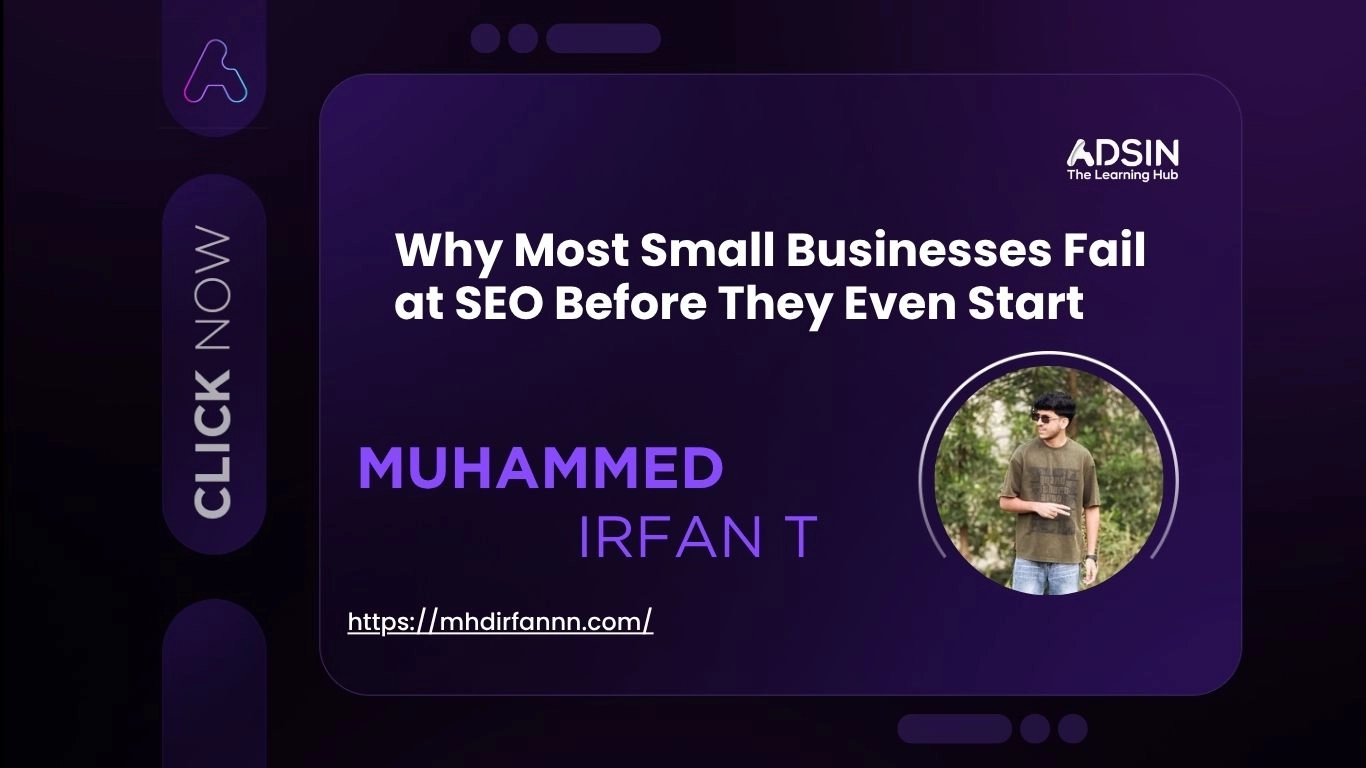
Why Most Small Businesses Fail at SEO Before They Even Start
Search Engine Optimization (SEO) is often promoted as the secret weapon for growing a business online. Small businesses hear success stories about websites ranking on Google, generating leads automatically, and increasing sales without spending heavily on ads. Yet, many small businesses fail at SEO before they even see results.
The problem is not always the competition, Google’s algorithm, or budget limitations. In most cases, businesses fail because they start SEO with the wrong expectations, poor planning, or outdated strategies. SEO is not just about adding keywords to a website. It requires consistency, strategy, and understanding how people search online.
If your SEO efforts are not working, there is a good chance the issue started long before the first blog post or keyword research session. Here are the biggest reasons why most small businesses struggle with SEO from day one.
They Expect Instant Results
One of the biggest mistakes small businesses make is treating SEO like paid advertising. With Google Ads or social media ads, you can see traffic immediately after spending money. SEO works differently. It takes time for search engines to trust a website, understand its content, and improve its rankings.
Many business owners start SEO with unrealistic expectations:
- Ranking on Google within a few weeks
- Getting hundreds of leads instantly
- Beating established competitors overnight
When results do not appear quickly, they stop publishing content, ignore optimization, or completely abandon SEO. The reality is simple: SEO is a long-term investment. Businesses that stay consistent for months usually outperform businesses looking for shortcuts.
They Ignore Search Intent
A common SEO mistake is targeting keywords without understanding what users actually want.
For example, a small electronics store may target a keyword like “best headphones,” even though the searcher may only want reviews, not to buy immediately. Meanwhile, a keyword like “buy wireless gaming headphones in Kerala” may attract customers ready to purchase.
Search intent matters because Google prioritizes content that solves the user’s problem.
Many small businesses fail because they:
- Target random high-volume keywords
- Write content only for search engines
- Ignore what their audience is searching for
Good SEO starts with understanding customer behavior, not just keyword tools.
Their Website Is Poorly Optimized
Even the best content cannot perform well if the website itself creates a bad user experience.
Small businesses often launch websites that:
- Load slowly
- Are not mobile-friendly
- Have confusing navigation
- Contain broken links
- Lack proper page structure
Google considers user experience a ranking factor. If visitors leave your site quickly because it is difficult to use, rankings will eventually drop. A simple, fast, and clean website usually performs better than an overly complex design filled with unnecessary animations and heavy elements.
Before focusing on advanced SEO tactics, businesses should fix the basics:
- Improve page speed
- Optimize for mobile users
- Use proper headings
- Create clear navigation
- Add relevant meta titles and descriptions
They Publish Content Without Strategy
Many businesses create blog posts just to “do SEO.” The result is generic content that nobody searches for or reads.
Examples include:
- “Top 5 Marketing Tips”
- “Why Business Is Important”
- “Benefits of Social Media”
These topics are too broad and already covered by thousands of websites. Successful SEO content solves specific problems. Instead of writing generic articles, businesses should focus on:
- Customer pain points
- Local search queries
- Industry-specific problems
- Beginner guides
- Comparison content
- Real-world solutions
For example, “How Small Cafes Can Rank on Google Maps in Kerala” is far more targeted and valuable than a generic marketing article. SEO content should always have a purpose: attract the right audience and answer their questions better than competitors.
They Focus Only on Keywords
Years ago, SEO was heavily based on repeating keywords across pages. Today, Google is smarter. Many small businesses still make the mistake of:
- Stuffing keywords unnaturally
- Repeating the same phrases excessively
- Writing robotic content
Modern SEO is about relevance, quality, and user experience. Google now evaluates:
- Content usefulness
- Website authority
- User engagement
- Content depth
- Search intent satisfaction
Instead of obsessing over keyword density, businesses should focus on creating genuinely helpful content that sounds natural and informative.
They Neglect Local SEO
Small businesses often overlook one of the easiest SEO opportunities: local search.
When customers search for:
- “best bakery near me”
- “SEO expert in Kerala”
- “mobile repair shop nearby”
Google prioritizes local businesses. Yet many small businesses fail to:
- Create or optimize their Google Business Profile
- Collect customer reviews
- Add local keywords
- Include accurate business information
- Build local citations
Ignoring local SEO means missing customers who are already searching for your services in your area. For small businesses, local SEO is often more powerful than trying to rank nationally.
They Stop Too Early
SEO rewards consistency. Unfortunately, most businesses quit before momentum builds. A common pattern looks like this:
- Start SEO with excitement
- Publish a few blog posts
- Wait for quick rankings
- See little progress
- Stop completely
The businesses that succeed are usually not the smartest or biggest. They are the ones that stay consistent. SEO compounds over time. Every blog post, backlink, and optimization strengthens your website’s authority gradually. Stopping early resets progress and wastes previous effort.
They Try to Do Everything Alone
SEO includes technical optimization, content writing, keyword research, analytics, link building, and strategy. Many small business owners try handling everything themselves without enough time or expertise.
This often leads to:
- Inconsistent publishing
- Poor optimization
- Outdated tactics
- Burnout
While learning basic SEO is valuable, businesses should also know when to seek expert guidance or professional support. Even simple improvements from an experienced SEO professional can save months of wasted effort.
Conclusion
Most small businesses do not fail at SEO because SEO does not work. They fail because they begin with unrealistic expectations, weak strategies, and inconsistent execution.
SEO is not about chasing quick rankings or stuffing keywords into random blog posts. It is about understanding your audience, creating useful content, improving user experience, and building trust over time. Businesses that approach SEO with patience and strategy usually see long-term growth that paid ads alone cannot sustain.
The good news is that most SEO mistakes are fixable. By focusing on the right foundations from the beginning, small businesses can avoid common failures and build a stronger online presence that delivers results for years to come.
Author: Muhammed Irfan t